Practical solutions to reduce chemical reliance in commercial horticulture

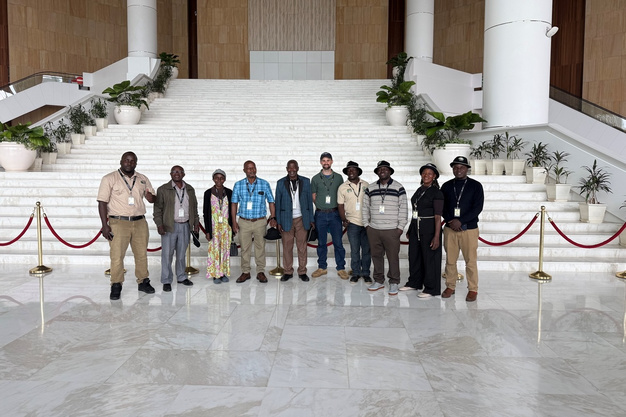
The Woolworths Vision Zero Grower Day brought together growers, researchers, technology providers, and biological input specialists to explore practical solutions to reduce chemical reliance in commercial horticulture. Held in Franschhoek, the event focused strongly on integrated pest management (IPM), resistance monitoring, biological crop protection, regenerative agriculture, and precision application technologies, with particular emphasis on vegetables, protected cultivation, and sustainable production systems for the future. Organized by Tom Murray, Rushdah Kannemeyer, and Collen Mubi of Woolworths, the event followed on from the retailer’s Vision Zero roadshows and showcased ongoing collaborative research across the industry. He mentioned they found it important to invite students to attend the event as they form part of the future of the industry.

Opening the conference, Alison Pohl described Vision Zero as a central component of Woolworths’ sustainability strategy under its Good Business Journey programme. The initiative focuses on lowering pesticide residues through biological control and integrated pest management (IPM), while supporting broader goals including zero packaging waste and net-zero emissions.

Soefyaan Najaar emphasized the retailer’s “Farming for the Future” programme, stating that “small continuous improvements make the biggest impact.” He highlighted the programme’s tailored, farm-specific approach to regenerative agriculture, focusing on soil health, water management, biodiversity, and resilience across more than 800 South African farms.

© HortiDaily
The Woolworths South Africa Technology Team: Produce & Horticulture at the Nik Group drone exhibition

Resistance monitoring becomes critical focus area
Presenting on fungicide resistance, Tom explained the increasing importance of EC50 testing in resistance management programmes. “EC50 is the fungicide concentration that reduces fungal growth or biological activity by 50% compared to an untreated control,” he said. Woolworths began resistance investigations following rising botrytis pressure in roses, initially sending samples to Spain before expanding testing through the ARC in Pretoria.

Current resistance monitoring work now includes tomatoes, peppers, and citrus. He noted that quantitative EC50 analysis provides more detailed insight than single-dose assays and is becoming a standard metric for tracking reduced sensitivity in pathogen populations.

© HortiDaily
Ruben Schoombie (BerryWorld South Africa) and Colin Van Den Heuvel (Woolworths South Africa) attending the presentations

Tomato and pepper trials examine residue breakdown and Tuta absoluta control
At Stellenbosch University, Dr Estelle Kempen is leading trials investigating pesticide residue breakdown curves in fresh produce under both open-field and protected cultivation systems.

She reported that residue degradation occurs rapidly during the initial days after application, but slows significantly later in the degradation cycle. “Residues break down faster on leafy greens than on fruit,” she explained. Tom noted that bird-protected pan light trap systems were incorporated into the study design.

Researcher Stefano Merezes discussed ongoing work targeting Tuta absoluta, which is causing severe losses in South African tomato production. “Pheromone traps only catch males and are not effective against egg-laying females,” he said. Trials with light traps are showing promising results, particularly under protected cultivation, where specificity improves significantly. “Greenhouses are actually a key part of managing Tuta absoluta because physical separation is critical.”

© HortiDaily
Stellenbosch University researchers Stefano Merezes, Dr Murray Dunn, and Dr Estelle Kempen

Entomopathogenic nematodes gain commercial potential
Dr Murray Dunn presented work on entomopathogenic nematodes (EPNs) as biological control agents for Tuta absoluta. According to Murray, locally isolated species are proving highly resilient under African growing conditions.

Steinernema jeffreyense is currently our favourite species,” he said, referring to the nematode identified near Jeffreys Bay in South Africa. Researchers are now focusing on scalable production systems using biphasic foam-based methods rather than expensive bioreactors. “The goal is for growers to potentially produce these on-farm commercially.”

He added that secondary bacteria associated with EPNs are also demonstrating potential against citrus black spot while improving plant biomass development in soil systems.

© HortiDaily
Amore Cyster (Woolworths), Julia Delport (Yukon/ Unlimited Group: one of the Woolworths suppliers), and Wafeeka Vardien (Woolworths)

Water, pollinators, and biologicals under scrutiny
Larne Auerswald of Labserve stressed the importance of water and residue testing following recent Western Cape flooding events. “Growers should be asking, ‘What happened to my topsoil? ‘” he said, warning that fertilisers, residues and contaminants may have moved through production systems. He also highlighted pesticide accumulation in beehives and the need for pollinator monitoring.

Biological crop establishment and postharvest disease suppression featured strongly during the SoilTech presentations. Trials showed that biological transplant treatments reduced transplant shock and fertiliser requirements in peppers, while beneficial organisms identified preharvest may suppress diseases such as Fusarium, sour rot, and black mould in tomatoes and peppers.

© HortiDailyFranziske Ehlers of Vermitech (SoilTech’s Laboratory) presented on ongoing tomato and pepper trials investigating biological alternatives for postharvest disease management. On the right is Nico van Vuuren of SoilTech

Precision application and pollination technologies advance
Marius Ras shared spray deposition trial results showing that backpack sprayers achieved superior coverage beneath leaf surfaces compared to other application systems in pepper trials.

© HortiDaily
Marius Ras (Ras Consult) on his pepper spray deposition trial research

Meanwhile, the Bee-Tech team demonstrated how bee vectoring technologies are delivering biological products directly to blooms. Blueberry studies conducted with Stellenbosch University showed significantly reduced botrytis levels following bee-mediated biological delivery.

They additionally showcased locally bred hoverfly pollination systems for protected blueberry production, reinforcing the increasing role of alternative pollinators in greenhouse environments.

© HortiDaily
Presentation on Afrikelp biostimulant application to bell pepper blooms to improve pollen viability

Closing the technical sessions, Kobus Pienaar warned that resistance pressure continues to intensify across horticultural crops. “We need to protect the activities that are still legal and allowed,” he said. While fruit sectors are generally performing well within Woolworths’ residue frameworks, he noted that vegetables and flowers still require substantial improvement in IPM implementation and resistance management practices.

Growers urged to protect remaining active ingredients
During the industry showcase, Therese Pretorius from Andermatt Madumbi presented new biological crop protection developments, including Sero-X™ for whitefly management in tomatoes, aimed at supporting resistance management programmes and reducing pressure on conventional chemistries.

© HortiDaily
Theresa Pretorius of Andermatt-Madumbi, South Africa

Autonomous spraying technologies also formed part of the industry showcase, with NIK Group demonstrating its XAG R200 agricultural rover and drone systems for precision application in horticultural crops.

© HortiDaily
The latest NIK Group Drone being presented

Oloff Bergh of the NIK Group highlighted the potential for reduced labour inputs, improved spray accuracy, and significantly lower carbon emissions compared with conventional diesel-powered spraying systems, particularly under protected cultivation conditions. “The rover has a 2cm accuracy in greenhouse systems, and can turn on itself.”

© HortiDaily
Oloff Bergh and the NIK Group Rover being presented

There was strong participation from industry suppliers, biological solution providers, technology companies, and technical specialists exhibiting throughout the day. Exhibitors included Andermatt Madumbi, Bee-Tech, BioBee, Koppert, Labserve, Metos, Ras Consulting, and SoilTech.

For more information:
Tom Murray
Woolworths
Tel: +27 21 407 9111
Email: [email protected]
https://www.woolworths.co.za/